
Why Streaming Subscriptions Make You Scream
Are These Services Persecutory or Effective Hyper-Capitalism? (Vol. 6; Issue 12)

A well-worn joke, common, if not that funny, goes:
Just because you’re paranoid doesn’t mean they’re not out to get you.
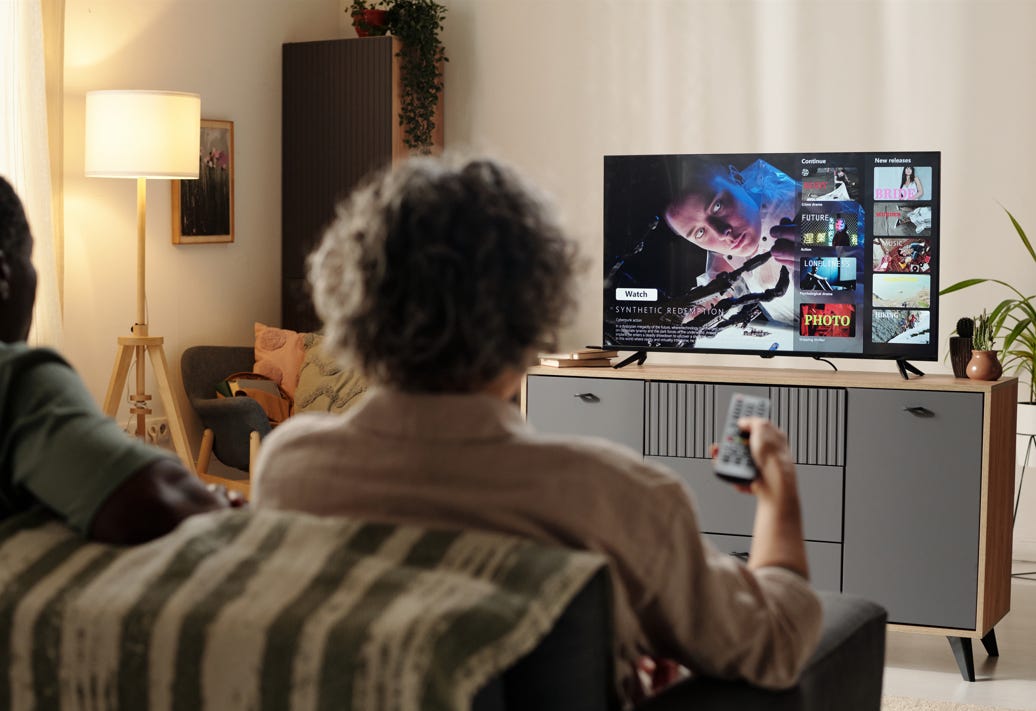
Are you paranoid because you think streaming subscriptions are being sneaky? Or, are they really trying to catch you off guard and exploit you? Initial offers, say, from Hulu or HBO Max, start out innocently with a free trial. But like other utilities, their goal is to make billions, and they do so by charging a relatively small fee to large swaths of people.
It wouldn’t be such a big deal if their costs weren’t so slippery. You can unexpectedly find yourself paying hundreds of dollars for annual subscriptions, many of which you never use. Why would you remember to cancel the three trial subscriptions you purchased before they convert into paid ones?
Many of these firms deliberately make it difficult to delete the service. A few years ago, I had a print subscription to the Wall Street Journal. It was a cinch to obtain the subscription—paper, digital or both—using their website. However, to stop the newspaper from arriving on my doorstep, I had to call an 800 number, wait 15 minutes to speak with a person and hold my ire while the representative tried to talk me out of cancelling. Generally, it is easier to cancel streaming subscriptions, but these companies will likely place obstacles in your way.
So, have these deceitful practices made you paranoid, or is this just how capitalism works?
That question is, surprisingly, rather difficult to answer. On the one hand, it could be paranoia. According to the International Classification of Diseases - 11 (ICD-11) (2019), individuals with paranoid disorders feel distrustful and suspicious of others, have difficulty forgiving insults and tend to misconstrue neutral actions as threatening.
The deliberately manipulative behavior of these companies creates a sense of wariness, even suspicion, in everyone. Also, who would not feel insulted after spending hours on the phone with Adobe, Microsoft, Amazon or Apple (to name a few)? The allegedly “neutral” actions of these firms are, in truth, threatening us by efforts to deceive. Rather than a “disorder,” our societal paranoia is entirely normal. They are out to get us.
On the other hand, one could argue that these firms operate in highly competitive markets that justify outright manipulation to survive. The American mobile phone industry, for example, is controlled by a triopoly of companies known as the "Big Three:” Verizon, T-Mobile and AT&T. They desperately offer “deals” to persuade customers of one provider to switch to another. Intense forms of persuasion come rather close to persecution, validating the idea of societal paranoia.
In his book, Escape From Freedom, psychoanalyst Erich Fromm (1969) distinguishes between “freedom from” and “freedom to.” The former, which concerns emancipation from external restrictions, he calls negative freedom. People living in Russia, North Korea, Iran and other countries led by authoritarian governments necessarily struggle for freedom from such constraints. Their efforts to free themselves from governmental forces that bind them illustrate negative freedom.
We Americans, so far at least, and rather tremulously these days, enjoy freedom* to, the positive freedom to assert ourselves in regard to these utilities’ coercive tactics. Little can be done, particularly among the poor, when it comes to basic necessities like electricity or water. However, when it comes to luxuries like streaming services, engaging one’s personal freedom is crucial. You might feel paranoid that these companies intend to steal your money; you might consider them good capitalists who, nonetheless, want to separate you from your money. Either way, it behooves us to exercise our freedom to ensure we’re paying for services we want rather than services these firms bamboozled us into.
__________________________________
*Our “freedom,” while considerable, still has many constraints that are easy to forget. Not only is a war being waged without congressional approval (by our representatives), but most of us take roads rather than rapid transit (because it’s not available), pay fortunes for healthcare (in premiums or copays because no form of universal health care is available), cannot afford houses like our parents (because of runaway inflation), have fewer choices about mobile phone services because of the triopoly (other services exist, but their coverage is not as good), and, as of late, we must pay a fortune for gasoline (when America should’ve been weaned off civilization-killing fossil fuels decades ago). As I noted in an earlier essay, we Americans are increasingly treated like commodities to be exploited rather than citizens to be protected.
Enjoying this newsletter? Consider a free subscription and share it with a friend.
And check out my book, Lover, Exorcist, Critic: Understanding Depth Psychotherapy, available on Amazon.
References
Fromm, E. (1969). Escape from Freedom. New York: Holt.
World Health Organization. (2019). International statistical classification of diseases and related health problems (11th ed.). New York: World Health Organization.