
The Trillion-Dollar Warning
What Elon Musk's Fortune Reveals about Greed, Inequality and the Psychology of a Society Coming Apart (Vol. 6; Issue 26)

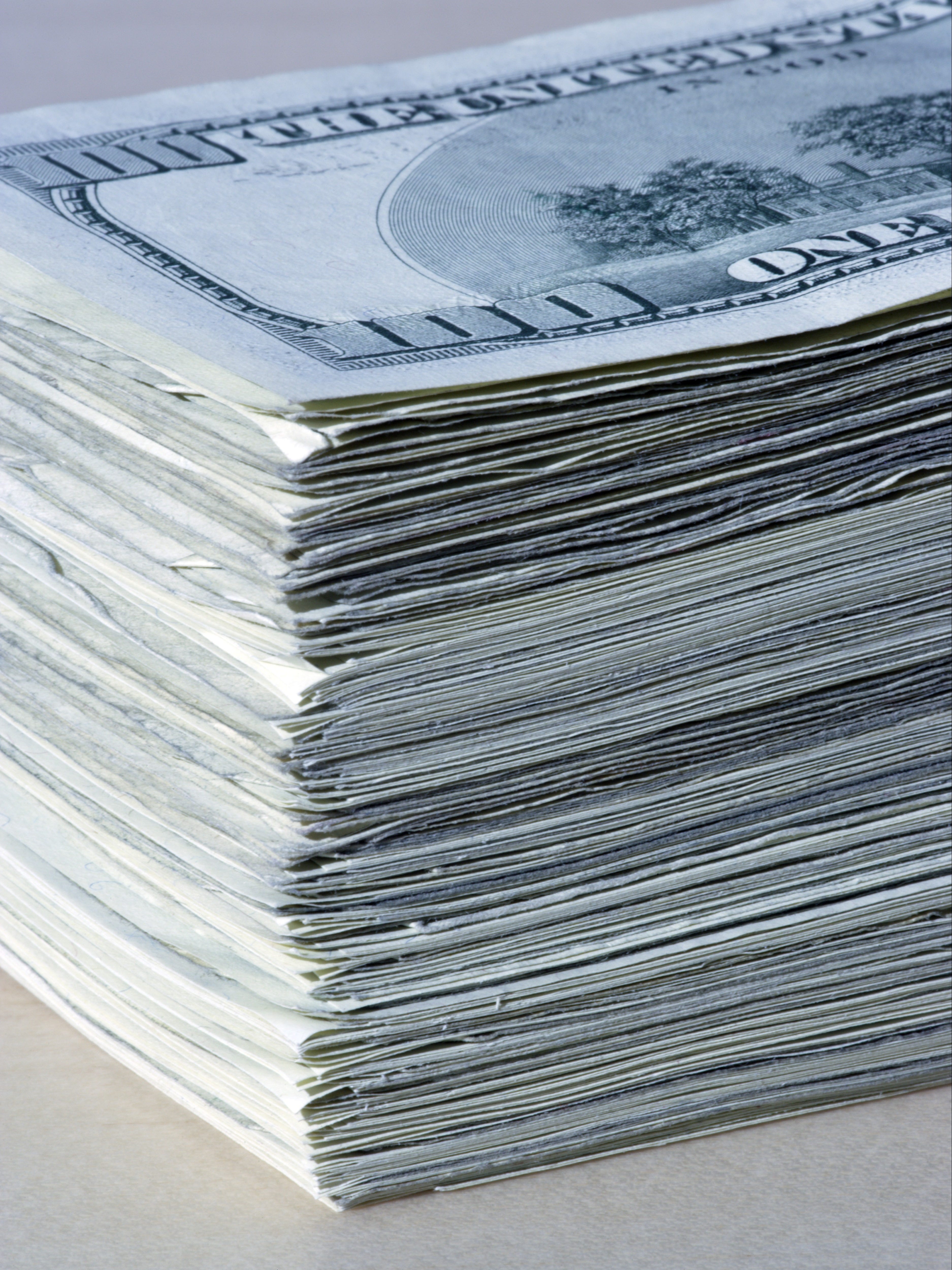
When SpaceX went public on June 12th, Elon Musk became the world’s first trillionaire. Try to visualize $1 trillion for a moment: If you were to place $100 dollar bills in a pile, $1 trillion would extend 679 miles high. John D. Rockefeller’s wealth once equaled 1.5 percent of the US gross domestic product; Musk’s wealth is twice that at 3%. And Musk doesn’t plan to stop there. He claims he wants to grow his wealth to $10 trillion.
When Musk, surrounded by thousands of cheering employees, gleefully rang the opening bell at the Nasdaq Stock Exchange, you couldn’t help wondering how much his employees earn.
Musk now has a net worth 5 million times that of the average American family.
The phrase bears repeating:
MUSK HAS FIVE MILLION TIMES THE MONEY OF THE AVERAGE AMERICAN FAMILY.
Such a level of income inequality defies description. Outrageous? Insane? Perverse?
Obviously, Musk’s wealth is beyond extreme, but we can’t let the US government off the hook. The governmental system tasked with caring for the American people has failed, and Musk simply represents its degree. According to the Economic Policy Institute, the top 1% of American households earn an average of $1.3 million per year, while the bottom 99% earn around $50,000 per year. The wealthy 1% earn 26 times the income of the rest of the population.
Such levels of income inequality are beyond shameful. But this shame, one of the most uncomfortable emotions, can also guide us to behave more ethically. Shame refers to an internal attack, like a critical but corrective voice, and it invites corrective behavior. Guilt is a similar feeling, but, unlike shame, it involves another party. We see neither guilt nor shame in Musk. But the astonishing level of his new wealth might be enough to provoke collective shame and invite action among global citizens.
Platoi, the Greek philosopher interested in effective governance, believed a thriving republic would limit differences between the rich and the poor to a ratio of 4:1ii. Anyone acquiring more than four times the wealth of the poorest citizens would donate the surplus to Athens, where Plato lived. Musk contributes less than one percent of his wealth to philanthropy. He confirms Plato’s characterization of greed as “the fundamental weakness of Western civilization.” Indeed, we are witnessing greed taken to unimaginable extremes.
Even Plato knew that the 4:1 wealth ratio was aspirational, if not impossible. But he certainly encouraged citizens, including those wealthy ones “with a sense of fairness,” to strive to level society, including by shaming those with excessive fortunes. He witnessed three successive class-based civil wars in his era. There was an oligarchic revolution of the rich against the poor, followed by a democratic revolution of the poor against the rich, and then another oligarchic revolution.
Along these lines, Marxiii believed that capitalism, if left unchecked, would inevitably lead to recurring revolutions. Writing before Marx, and an ardent capitalist, GWF Hegeliv thought that “the state always precedes capital.” In other words, Hegel believed, a thoughtful political community must provide a moral structure before market forces can function properly. In Hegel’s view, the state generates the laws and institutions, creating a cultural unity that keeps the chaos of the free market in check. This allows true individual freedom to exist.
Musk’s outrageous wealth, when combined with the equally ridiculous estates of oligarchs like Jeff Bezos, Rupert Murdoch or Mark Zuckerberg, demonstrates how much government fails us. The CEOs of the major health insurance companies earn more than $20 million per year. Meanwhile, the US is the ONLY country competing in the World Cup that does NOT have some form of national health insurance.
The shame!
The current American economic divide resembles France just before their famously bloody revolution. French society was then divided into three tiers. The “first estate,” the clergy, owned roughly 1% of all land and collected church tithes. The nobility formed the “second estate,” holding another 1% of the land and monopolizing top government and military jobs. Like the clergy, they dodged taxes and treated peasants like slaves. The commoners, roughly 98% of the population, and including everyone from poor rural peasants to wealthy urban merchants, comprised the “third estate.” They possessed little wealth but carried the entire tax burden for the nation.
You don’t need a degree in economics to understand how broken our government has become. No one person should be allowed, ever, to accrue greater assets than a government, which, in turn, should operate in service to the people. According to Yahoo Finance, Musk's fortune exceeds the annual economic output of approximately 150 countries. Only around 25 of the world’s wealthiest countries, like the United States, China, Germany and Japan, exceed his net worth.
Markets work, with proper controls. Individuals should be rewarded for their innovativeness and hard work. Societies will always be economically stratified. Musk’s creative intelligence deserves to be rewarded, but not on the ridiculous scale of 5 million:1.
Love him or loathe him, Musk is a signal. He symbolizes the grotesque excess, the lingering adherence to that famous catchphrase uttered by the fictional corporate raider, Gordon Gekko (played by Michael Douglas) in the 1987 film, Wall Street:
Greed is good.
Not true. Greed elevates the select few while millions suffer. A government that allows corporations to act like individuals, fails to sufficiently tax the rich and distributes wealth unfairly invites rage to grow and fester. Like lava building up pressure in a volcano-prone mountain, such collective agitation could lead to a sudden explosion. Revolutions described by thinkers from Plato to Marx are increasingly possible. These are often violent, chaotic and ineffective. The arrogant excesses of men like Elon Musk call for the rest of us to turn away from screens and insist the government act in the interests of the people.
Enjoying this newsletter? Consider a free subscription and share it with a friend.
And check out my book, Lover, Exorcist, Critic: Understanding Depth Psychotherapy, available on Amazon.
References
i. Plato. (2016). Laws (T. Griffith, Trans.). Cambridge University Press. (Original work published ca. 348 B.C.E.)
ii. Williams, D.L. (2026). Elon Musk Confirms Ancient Concerns About the Superrich. New York Times, Published June 21, 2026.
iii. Marx, K. (2007). Economic and philosophic manuscripts of 1844 (M. Milligan, Trans. & Ed.). New York: Dover.
iv. Hegel, G. W. F. (1991). Elements of the philosophy of right (A. W. Wood, Ed.; H. B. Nisbet, Trans.). Cambridge University Press. (Original work published 1821).
Block, C. (2026). If You Thought The Global Financial Crisis Was Bad… The Economist, op-ed piece published June 28, 2026. (Block is the founder and CEO of Muddy Waters Research).