
The Perversions of Prisons and National Parks
Societal Psychopathology Abounds in Both Institutions (Vol. 6; Issue 16)

If a man in a trench coat flashed you while walking along a boulevard, you’d feel shocked, perhaps disgusted. You’d likely think:
What a pervert!*
Publicly perverse behavior of this ilk is easily identified. In contrast, societal perversions, like those committed by governments against citizens, are subtle. Perversions are behaviors deliberately deviating from what is considered right, good or expected. In terms of sheer numbers, government-perpetrated perverse behaviors greatly exceed those committed by individuals. For example, the way international corporations treat people like commodities for exploitation leads to income inequality, housing shortages, ecological disasters and a broken healthcare system. Perversion.
In the interest of simplicity and provocation, I explore one stark and rather surprising example, namely the perversities shared by prisons and national parks.
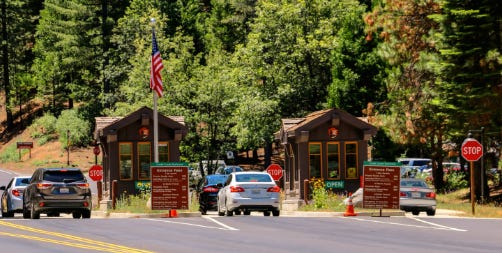
First, both institutions involve denial by the American public. US President Ulysses S. Grant’s signing of the Yellowstone National Park Act in 1872 started the national park system. By 1916, some 150 million acres were protected within 14 national parks. These are, without exception, spectacular nature preserves. However, they contribute to environmental plunder across the rest of the country. Entire regions have become wastelands because of coal mining, oil and gas drilling, air pollution, marine exploitation, deforestation and nuclear waste. The national parks, unconsciously, become dissociated centers of comforting nature that invite us to ignore how we treat nature more generally.
The prison system demonstrates a similar dissociation process. Rather than deal with crime by addressing underlying social causes or creating truly rehabilitative institutions, we have instead a massive system of jails and prisons to separate these individuals from the rest of society. As of 2023, 1.2 million people of the 360 million US citizens were imprisoned. (China, with a population of 1.4 billion, imprisons 2 million). Drug crimes account for nearly half of the American prison population. Approximately 15 percent of those incarcerated in the US are violent criminals who require isolation from society.
In truth, there are many more effective ways to retrain and rehabilitate inmates. More effective means of treating prisoners whose core problem relates to drug addiction also exist. However, prison guard unions and private prison company lobbyists prevent any meaningful prison reform from occurring. Prisons allow us to ignore better ways of rehabilitating inmates, and national parks allow us to ignore better ways of treating our natural environment.
Keep reading with a 7-day free trial
Subscribe to Journeys Into the Unconscious Mind to keep reading this post and get 7 days of free access to the full post archives.