
Naloxone for the Cell Phone
An Absurd Antidote to the Greatest Addiction in History (Vol. 6; Issue 2)

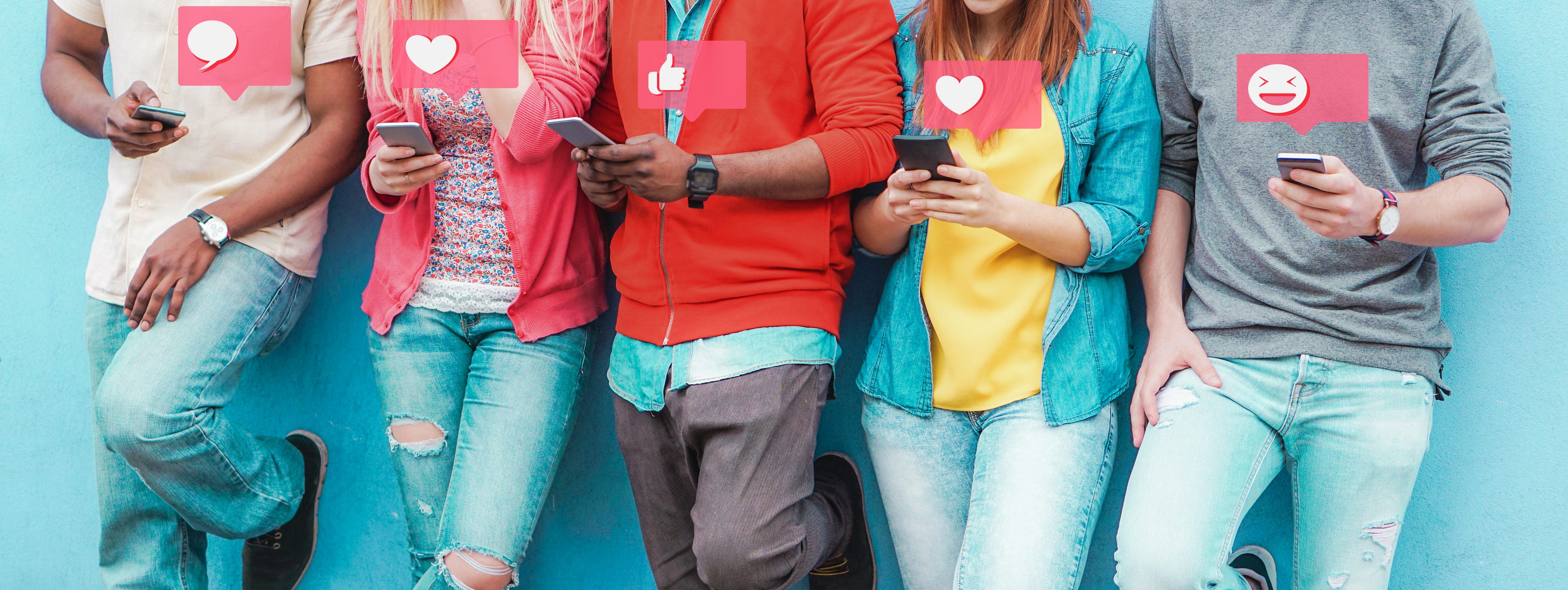
The alarm over opioids, cocaine, and amphetamines sidelines a much greater hazard to humanity: the addiction to social media apps on mobile phones.
While an American president captures narco-terrorists in Venezuela or conducts extra-judicial executions of drug smugglers in the Caribbean, we ignore the more prevalent, and arguably more dangerous, addiction to our always-present devices. The drug-related misdeeds by the Venezuelan president and sailors in the Caribbean are alleged; the problem with social media is anything but. And, of course, that same bellicose president cannot stand against the social media firms that helped elect him.
Addressing the problem of social media on cell phones represents an immense, global challenge. Solutions stray far beyond the confines of this essay. But a recently released, incredibly absurd solution to our fixation with mobile phones, The Brick*, provides a sufficiently limited focus. Before elaborating upon the problems with this antidote, I discuss the expanding influence of social media.
As early 2000s platforms like Myspace quickly metastasized into Facebook, Instagram, YouTube, and TikTok, so too did our opportunities to engage in social masturbation. The masturbation analogy is deliberate. It is a fine activity, of course, but one which, ideally, evolves to at least include actual sexual intercourse with a real human person (or persons).
A recent Pew Research Center survey of US teens shows that most use social media on their smartphones; nearly half report being online “almost constantly” (Faverio and Sidoti, 2024). In 2005, five percent of Americans used social media. By 2024, 70 percent of Americans had active social media accounts. Now, some 5 billion people use these platforms daily, mostly through their mobile phones.
Per usual, the social media companies strive, ever more actively, to steal people’s minds. Lest you think that the phrase, steal people’s minds, is excessive, consider that these companies, already known for keeping their users engaged, now employ AI programs to make them still more addictive. These largely unregulated AI systems seek ever more effective ways of getting and holding attention. A recent editorial in the New York Times (2026) called these efforts:
a bio-hack at the scale of the Earth’s population.
In brief, the social media firms try to appropriate our capacities for actively attending to anything else. The French mystic, philosopher, and political activist Simone Weil (1943/1997), who privileges the role of attention in living, writes:
The authentic and pure values — truth, beauty and goodness — in the activity of a human being are the result of one and the same act, a certain application of the full attention to the object. (p. 234).
Social media firms deaden our capacities for “full attention.” Instead, they drag us into rabbit holes of siloed informational loneliness. It is a miracle more have not been killed by drivers checking their likes and comments while on the road. It is equally miraculous to see anyone actually talking to one another in coffee houses, gyms, or the water coolers at the office. The capacity for social interaction is quickly vanishing. The social impacts of its loss will be immeasurable.
Instead of addressing real problems, like terrific fears of intimacy, epidemic levels of loneliness, or AI efforts to addict us to screens, yet another tech company sells a device “to remove distracting apps and notifications from mobile phones.” That device, The Brick, is all the rage. It invites us vulnerable humans to outsource one of our most precious human attributes, namely our will, into a thing. Advertisements for the device promise that, instead of complex instructions, difficult set ups, or subscriptions fees, it will provide users with:
Just more time for what matters.
Are they kidding?
Instead of authentically creating “time for what matters,” compulsive social media users can now purchase The Brick to help with self-control. What ever happened to good old self-discipline? Why not check social media at 8 am, noon, 6 pm, and then be done with it? Deliberate efforts by social media firms make it a Herculean task to limit screen time, but certainly not an impossible one.
Meanwhile, more people are becoming literally addicted to social media. Characterized by a strong urge to log in and impairment in other realms of life, nearly 10 percent of Americans are addicted to it. The symptoms resemble other substance abuse disorders. They include mood swings, interpersonal conflicts, preoccupation with the media, tolerance (ever-increasing use over time), and withdrawal symptoms (if removed from access).
Using new technologies like The Brick to control social media usage is like drug dealers selling Naloxone * to go with Fentanyl. Now that culture creates something to addict you, it provides an antidote to carry with you. Technologies like The Brick personify the idea of perversions. They are reminiscent of the efforts by another company, friends.com, to address loneliness by creating an AI device that behaves “like a friend.” Here again, we find breathtaking absurdity offered by a tech firm that enables social withdrawal while selling it as a means of becoming more socially engaged.
If an intense compulsion crosses the line into a literal addiction, with its attendant tolerance and withdrawal syndromes, then serious help is needed. By that point, the substance or behavior becomes a kind of imprisonment. Free will typically proves insufficient. The disease model makes more sense at that point. Some kind of professional intervention is required to break to dependency.
But what about exercising self-discipline prior to such entrapment? What about putting cell phones in drawers, closets, gloveboxes, cabinets, safes, briefcases, cubbyholes, bathrooms, shelves, bins, baskets, trays, cribs, pantries, or pockets? Heads up that social media companies not only intend to addict us but they attack our capacities to reflect and think critically. They inhibit us reading other media like, say, books. Worse, they harm our capacities for love. We risk losing the type of attention that lies at the heart of our personhood. Who would have imagined that the faces of burned-out meth addicts staring into space would become the faces we see in public day in and day out?
____________________________________
*The Brick, available at brick.tech, was released in fall 2023.
**Naloxone, an opioid antagonist, going by the generic name of Narcan, is used to reverse an opioid overdose; it works by blocking opioid receptors in the brain.
Enjoying this newsletter? Consider a free subscription and share it with a friend.
And check out my book, Lover, Exorcist, Critic: Understanding Depth Psychotherapy, available on Amazon.
References
Faverio, M. and Sidoti, O. (2024). Teens, Social Media and Technology. Pew Research Center. https://www.pewresearch.org/internet/2024/12/12/teens-social-media-and-technology-2024/
Burnett, D.G., Loh, A., and Schmidt, P. (2026). The Multi-Trillion-Dollar Battle for Your Attention Is Built on a Lie. New York Times, published 1/10/26.
Weil, S. (1943/1997). Gravity and Grace. New York: Bison Books.